
A Lesson in Accountability, Resilience, and Leadership
“You shouldn’t point your finger at someone, because when you do there are three fingers pointing back at you.”
This proverb about self-reflection has always resonated deeply with me because I believe we largely create our own circumstances. Life will throw lemons at us from time to time, but when it does, the real question becomes: How are you going to handle the challenge?
My belief in personal accountability did not come from theory. It came from life experiences that forced me to learn early that blaming circumstances does nothing to move you forward.
Early Lessons in Work and Responsibility
I grew up in a single-income, middle-class family in the Jones Park neighborhood on the west side of Rochester. My family owned the duplex we lived in. We occupied one apartment while the other was rented out so we could save money to build a home in the suburbs. Eventually, my father purchased a partially finished house from a bankrupt builder. It was inexpensive, but it required a tremendous amount of work to complete.
That was my introduction to construction and, more importantly, to the idea that if you want something, you must be willing to work for it.
That lesson became even clearer in 1989 when I was fourteen years old. At the time, Air Jordan sneakers were the thing everyone wanted. I asked my father if he would buy me a pair.
His response was simple, “You want Jordans? Get a job.”
So, I did.
I landed my first job at Schaller’s Restaurant peeling onions, making burger patties, and performing janitorial duties. Before long, I bought my own pair of Jordans. That moment taught me something I have carried throughout my life:
If you want something, work for it.
Becoming a Teenage Parent
During my junior year of high school, I found out I was going to be a father. I was sixteen years old.
Many people assumed that news would derail my future and force me to abandon any hopes of building a successful career. Instead, it became my motivation.
By that point I had already taken several graphics and printing classes in school. I served as a student teacher in the printing lab and even won a senior portfolio contest as a junior. After class one day, I approached my printing teacher and asked if he could help me find a job in the printing industry.
He did.
In March of 1992 I began working in the printing industry. In June I finished my junior year, worked full-time all summer, and during my senior year I left school at 10:20 AM so I could be at my full-time job by 11:00.
I was off to the races.
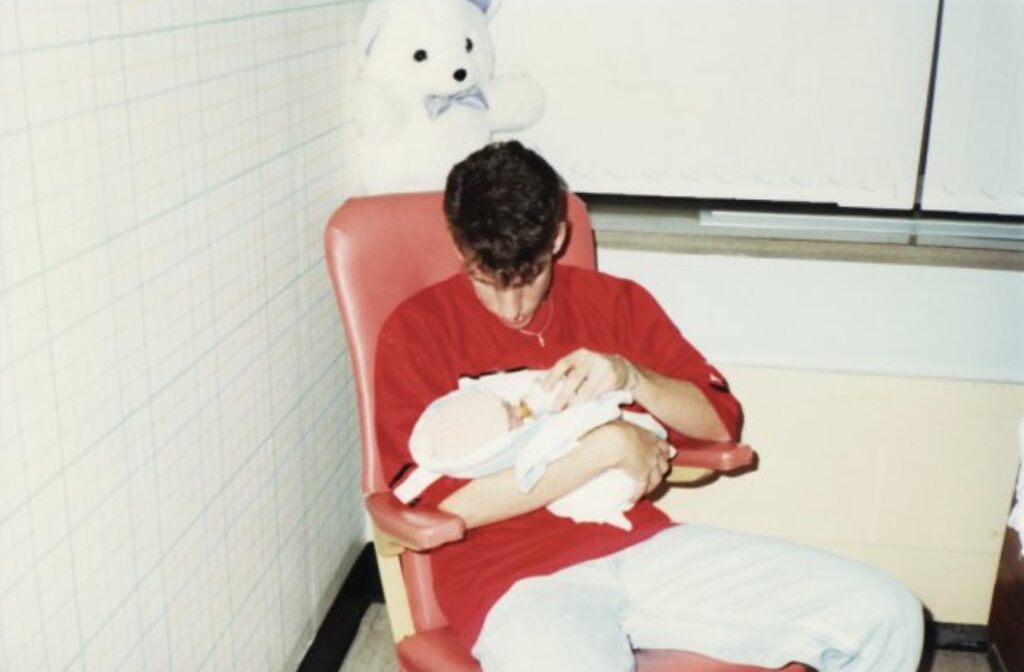
Me and My Son, October 23, 1992
Building a Career from the Ground Up
I started as a bindery helper. From there I worked on duplicators, printing presses as a feeder, and in prepress departments as a plate maker and proofer.
In 1994 I saw a job advertisement seeking a Scitex Operator. The ad said, “willing to train the right person.” I felt I was the right person and applied. I got the job!
That opportunity turned into a nineteen-year career where I eventually rose to Vice President of Operations.
I only left that position when I was offered the opportunity to work for Heidelberg Druckmaschinen AG, the largest manufacturer of printing equipment in the world.
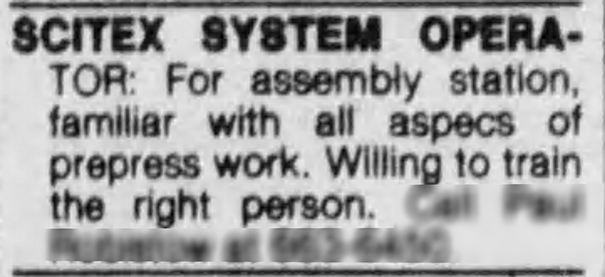
Democrat and Chronicle June 5, 1994
A Tragedy That Changed Everything
In 2001, at age twenty-five, I was in a meaningful relationship, and we were looking at houses together on a Sunday afternoon. My girlfriend left for work the following morning.
We never spoke again.
A driver ran a red light and T-boned her car. She suffered a traumatic brain injury that left her hospitalized for over a year. She eventually returned home, where her parents cared for her for decades. She never spoke again and required a feeding tube until she passed away from pneumonia twenty years later.
For years I helped care for her alongside her parents.
When I purchased my first home at age twenty-eight, I sat on the floor the first night and cried because she should have been there with me.
But the next morning I woke up and went to work.
I had a son to raise and responsibilities as a leader. At the time, I was the Plant Manager of a printing company.
People depended on me and I could not let my personal problems affect my ability to lead.
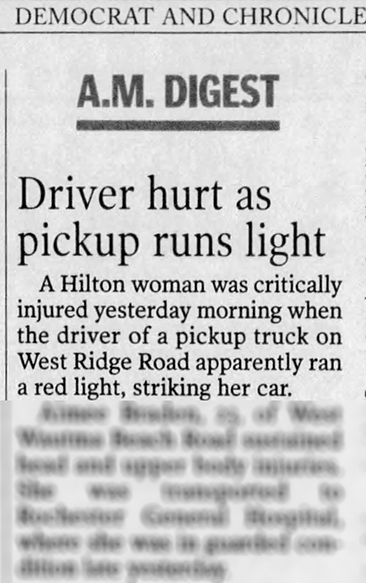
Democrat and Chronicle March 20, 2001
Taking Another Leap
In 2017, after more than twenty-five years in the printing industry, I made another major decision. I left the industry to join a childhood friend in the commercial construction business as the Vice President of his company.
At forty-two years old, I saw an opportunity to help build something from its infancy and welcomed the challenge.
I left a global corporation and moved into a 990 SF office.
Over the next nine years, the company grew by more than 1,100 percent and we had much success.
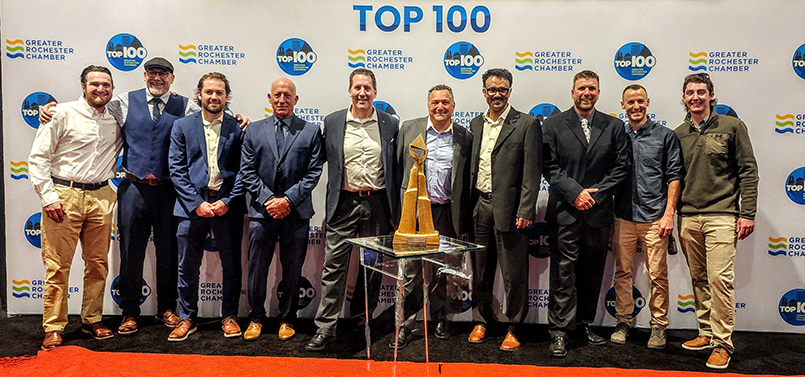
Rochester Chamber Top 100 Award Recipient for the 6th time.
The Greatest Challenge of My Life
In 2022, at the age of forty-six, I was diagnosed with Stage IV colon cancer that had metastasized to my liver.
That diagnosis breaks many people.
But I already knew something about adversity; you cannot control what happens to you, but you can control how you respond.
I stayed positive. I advocated for myself medically. I remained active and focused on what I could control.
During treatment I continued working. Our company completed construction of a new 25,000 SF corporate headquarters, and we moved into the building in October 2023.
Two months later I underwent a live-donor liver transplant.
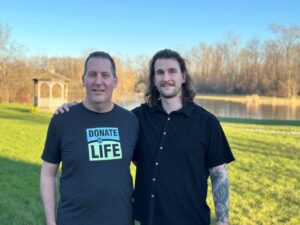
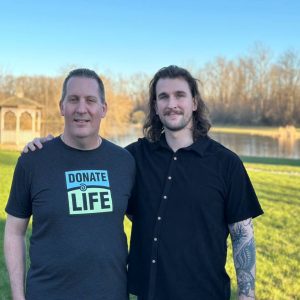
My donor was my thirty-one-year-old son.
In 1992, when I found out I was going to be a father, he became my driving force. He pushed me to work harder and build a future.
Thirty-one years later, he literally saved my life, again.
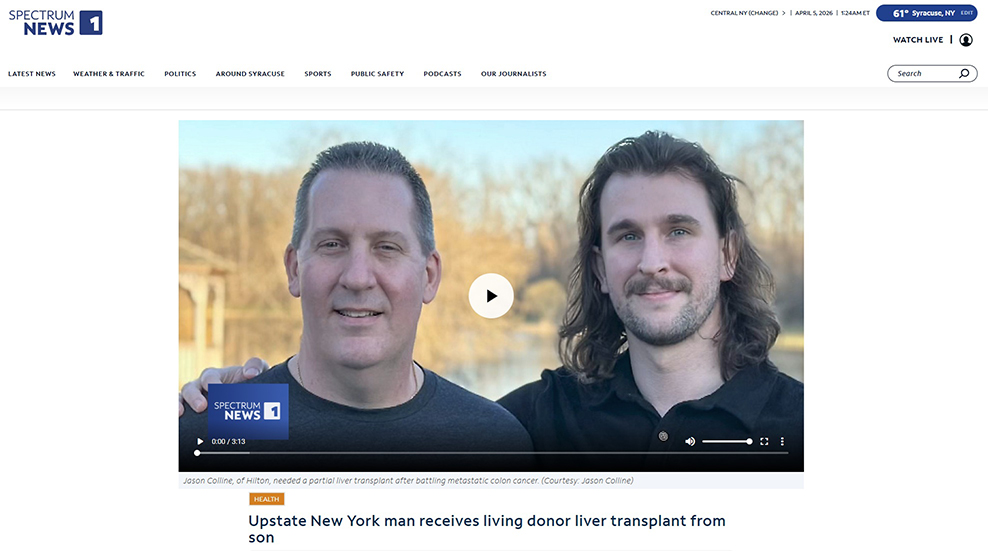
Spectrum News October 29, 2024
A New Chapter
In 2025 I stepped away from my role as Vice President and launched my own business providing:
- Business Consulting.
- Leadership Mentoring.
- Staff Development.
- Public Speaking.
The early months have been incredibly rewarding, and I have had the opportunity to help leaders and companies solve real operational challenges.
Why I Share My Story
I share these experiences because in life and in business I see too many people pointing fingers at others while refusing to examine their own actions.
I could have blamed my father for not buying me Jordans.
I could have let becoming a teenage parent dictate the trajectory of my career.
I could have allowed tragedy to consume me.
I could have given up when diagnosed with Stage IV cancer.
Instead, I focused on what I could control.
Even recently, in January of 2026, after undergoing a lung wedge resection surgery (to remove a cancerous tumor) and being diagnosed with pulmonary embolisms, I returned to work as an in-house consultant for a contractor. Five weeks following my surgery I was back in the office at 7:00 AM every morning.
Because that is what accountability looks like.
The Leadership Lesson
Throughout my career I have heard people say, “I didn’t get the promotion because…”
In my opinion, if you truly wanted it, you should have done so much that they had no choice but to promote you.
I have also heard leaders blame poor performance on the people they manage.
But if you are the manager, you are also the coach.
Your job is to elevate people, mentor them, and help them perform.
Leadership is not “do as I say.”
It is “do as I do.”
Look in the Mirror
It is easy to blame others when things do not go your way.
It is easy to blame circumstances.
What is difficult is looking in the mirror.
Poet Peter Dale Wimbrow Sr. captured this idea perfectly in The Man in the Glass:
“You may fool the whole world down the pathway of years
And get pats on the back as you pass.
But your final reward will be heartache and tears
If you’ve cheated the man in the glass.”
At the end of the day, success in life and business comes down to accountability. Circumstances will challenge you; people will disappoint you, and things will not always go your way. But the moment you stop pointing fingers and start looking inward is the moment you begin to grow.
The best leaders, the best professionals, and the most resilient people I have ever known share one trait; they own their outcomes. They examine their actions, adjust their approach, and keep moving forward. So, the next time something does not go your way, remember this simple truth; before pointing your finger at someone else, look at the three fingers pointing back at you.
If you are a business owner or executive facing difficult decisions, sometimes the best step forward is from an outside perspective. At CollineIQ, I work directly with leaders to improve accountability, strengthen teams, and drive results. Let’s connect and start the conversation today.