
One of the biggest mistakes I see business owners make is focusing on profitability while ignoring cash flow.
Here is a statement that surprises some people:
You can own a profitable company that is completely broke.
Strong sales, healthy margins, and a growing backlog can make a business look successful on paper. But none of those things make payroll on Friday. They do not pay your vendors, fund the next project, purchase materials, cover insurance premiums, or keep the lights on.
Profitability matters, but cash flow keeps the business alive.
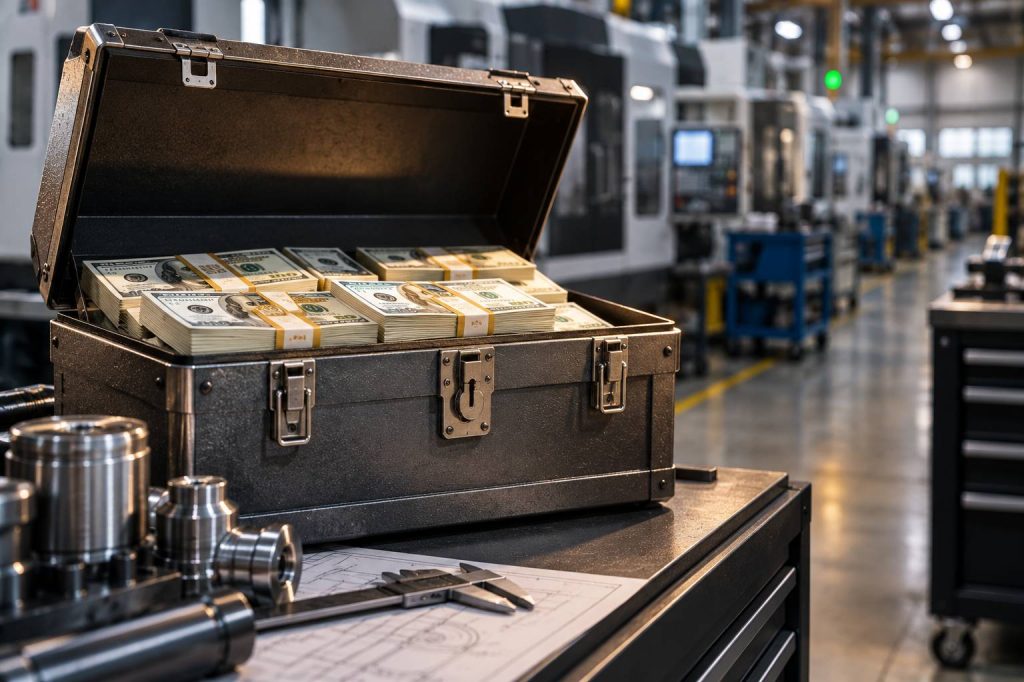
I often refer to a company’s available cash reserves as its “war chest.”
Traditionally, a corporate war chest is a reserve of cash and other highly liquid assets that a company keeps available for strategic opportunities or unexpected challenges. I look at it more practically.
Your war chest is what gives you options.
It gives you the ability to survive a slow period without panicking. It allows you to take advantage of an opportunity when one appears. It helps you weather a customer who pays sixty days late, an unexpected equipment failure, a large insurance renewal, or a project that requires significant upfront spending.
Most importantly, it gives you time to make good business decisions instead of desperate ones.
Making Money and Having Money Are Different Things
This distinction is especially important in construction, manufacturing, and service businesses.
Imagine a contractor with $10 million in annual revenue and a healthy profit margin. The income statement looks great, and the backlog looks even better.
Let’s take a look underneath the surface.
Several customers are paying slowly and retainage is accumulating. A large project has been underbilled. Payroll hits every week and your vendors expect payment within thirty days. Another project requires materials to be purchased before the first meaningful payment arrives.
The company may be profitable, but the checking account tells quite a different story.
There can be a tremendous distance between earning a dollar and actually having that dollar in the bank.
Growth can make the problem even worse.
Business owners naturally think that more sales will produce more cash. Eventually, they should. But rapid growth frequently consumes cash before it produces it.
You hire employees before collecting revenue from their work. You purchase materials before getting paid by the customer. You add vehicles, equipment, software, insurance, office space, and administrative support to handle the additional volume.
Growth requires fuel and cash is that fuel.
Watch the Movement of the Dollars
If you want to understand the financial health of a business, looking at the bottom line is not enough. You need to understand how the dollars move through the organization.
I pay particular attention to:
- Accounts receivable aging: Who owes you money, how much do they owe, and how long has it been outstanding?
- Billing efficiency: Are invoices going out immediately, or is completed work sitting somewhere waiting to be billed?
- Work-in-progress reporting: Are jobs properly billed relative to their actual progress and costs?
- Payroll obligations: Do you understand the cash required for wages, payroll taxes, benefits, and other labor-related expenses?
- Vendor payment timing: When are your obligations due compared with when you expect to collect your receivables?
- Overall liquidity: How much readily available cash does the company have?
These are not just accounting questions; they are operational questions.
A Project Manager who fails to submit billing information on time affects cash flow. An estimator who misses a cost affects cash flow. A purchasing decision affects cash flow. Poor collection practices affect cash flow. Inventory sitting unused on a shelf affects cash flow.
Cash management is everyone’s business, even if they never touch the accounting system.
Build the War Chest Before You Need It
The worst time to start worrying about cash is when you are running out of it.
Building a war chest requires discipline.
When times are good, there is always another place to spend the money. Owners may increase distributions, purchase equipment, hire additional employees, expand facilities, or make other investments.
Some of those decisions may be completely justified.
But before money leaves the business, I believe owners should ask themselves a few simple questions:
- What happens if tomorrow does not look like today?
- What happens if your largest customer suddenly slows down payments?
- What happens if sales drop 20%?
- What happens if a major project gets delayed for three months?
- What happens if you unexpectedly need $100,000?
- What happens if an incredible opportunity appears and you need cash to pursue it?
Your war chest creates breathing room, and breathing room has tremendous value.
Cash Gives You Leverage
There is another side to maintaining strong liquidity that is sometimes overlooked.
Cash does not just protect you from bad things; it positions you to take advantage of good things.
Maybe a competitor wants to sell. Maybe a piece of equipment becomes available at an exceptional price. Maybe you have an opportunity to hire someone who could transform your organization. Maybe a customer offers favorable terms in exchange for a quick decision.
Companies with strong balance sheets can act and companies without cash often must watch opportunities pass by.
That is why I do not view a war chest only as emergency money. I also view it as strategic capacity.
It allows a business owner to make decisions from a position of strength instead of reacting from a position of necessity.
Know Your Number
Every business is different, so there is no universal dollar amount that constitutes an adequate war chest.
A company with predictable monthly recurring revenue has different cash requirements than a commercial contractor carrying retainage and funding weekly payroll. A manufacturer carrying significant inventory has different requirements than a professional services firm with minimal overhead.
The important thing is to determine what your business needs.
Start by understanding your normal monthly cash requirements. Then examine the risks specific to your company: customer concentration, collection history, seasonality, debt obligations, payroll, backlog, capital expenditures, retainage, inventory, and the timing difference between when you spend money and when you collect it. Then, establish a target.
Do not simply look at today’s bank balance and decide that you have “plenty of cash.” Know your number.
People and Dollars
My business tagline is “I know people and dollars.”
The dollars side of that equation is not simply about understanding financial statements or creating systems to maximize profit margins.
It is also about understanding where the money is, where it is going, when it is coming back, and whether the organization has enough of it to execute its plan.
Profit tells you whether your business model is working.
Cash tells you whether you can stay in the game long enough for that model to matter.
Purchase needs over wants and build your war chest as soon as you can.
Because at the end of the day, it is not enough to make money. You must manage the movement of money.
If you are profitable but constantly wondering where the cash went, it may be time to take a closer look at how the dollars are moving through your business.
I work with business owners to identify cash flow challenges, improve financial visibility, and build the processes needed to strengthen their war chest.
Sometimes an outside set of eyes is all it takes to find the dollars hiding inside your business.
If you would like to talk about your business, cash flow, or where opportunities may exist, let’s start a conversation.